
Amenity budgets are getting harder to defend. National occupancy sat at 94.8 percent in the fourth quarter of 2025 while rent growth slowed to 1.5 percent year over year, and roughly 409,000 new units finished construction over that same year, according to the National Apartment Association’s Apartment Market Pulse. When new supply is competing for the same renters and pricing power is thin, every dollar committed to an amenity has to come back as rent, as a renewal, or as a lower operating cost.
So which ones actually do that? We collect waste at apartment communities every night, which means we walk the grounds of properties across the amenity spectrum, from Class C garden communities with a laundry room and a mail kiosk to new lease-ups with pickleball courts and golf simulators. The pattern is consistent and a little uncomfortable: the features residents notice most are the ones that work every single day, and the features that photograph best are frequently the ones nobody uses. This guide separates the amenities with documented demand and documented premiums from the ones that quietly eat an operating budget.
Renters place the highest value on in-unit and building fundamentals, not lifestyle extras: 93 percent call an in-unit washer and dryer important, 93 percent say the same about air conditioning, and 90 percent about high-speed internet. Secure parking carries an average expected premium of about $78 a month, the largest documented figure in current national survey data. Managers systematically misread this, ranking technology and amenity packages above the maintenance, security, and cleanliness that residents put first. Retention math usually beats rent math, because a single non-renewal costs roughly $3,872. And a broken amenity is worse than no amenity: more than a quarter of one- and two-star reviews in 2023 complained that amenities were closed or not working.
Last updated: September 2026. We refresh this page as national renter preference surveys and turnover cost data are republished.
Which Apartment Amenities Actually Increase Rent?
What does the national survey data show?
The amenities with the strongest pricing evidence are the ones renters treat as housing quality rather than lifestyle. In the Greystar 2025 Design Survey, which drew on more than 137,000 residents, secure and covered parking was valued by 84 percent of renters and carried an average expected rent premium of roughly $78 per month. That’s the largest per-feature premium in current published survey data, and it attaches to a piece of infrastructure, not a lounge.
The NMHC and Grace Hill Renter Preferences Survey, built on responses from 172,703 verified renters, puts in-unit washer and dryer and air conditioning at the top of the importance list, both at 93 percent, with high-speed internet just behind at 90 percent. Soundproof walls came in at 88 percent and noise-reducing window panes at 83 percent, which is worth sitting with. Renters rank acoustic privacy above nearly every amenity that shows up in a property tour, and it isn’t close.
How should you read a stated premium?
Carefully. Survey premiums are what renters say they’d pay, not what a market has proven it will bear, and the two diverge. Treat them as a ranking of relative value rather than a price sheet. The useful signal is the order: parking, in-unit laundry, and connectivity sit above every social or recreational amenity in every major national survey we could verify.
| Amenity or feature | Documented demand | Pricing evidence |
|---|---|---|
| In-unit washer and dryer | 93 percent call it important (NMHC and Grace Hill) | Top-ranked in-unit feature in every survey reviewed |
| Air conditioning | 93 percent call it important | Baseline expectation, not a differentiator |
| High-speed internet | 90 percent call it important (NMHC and Grace Hill) | Increasingly bundled rather than priced separately |
| Secure or covered parking | 84 percent value it (Greystar) | About $78 per month average expected premium |
| Expansive closets and storage | 88 percent interested; 38 percent would not rent without | No published premium, but a hard veto for many renters |
| Fitness center | 83 percent important; 68 percent use it regularly | Usage rate is unusually high for a shared amenity |
| On-site childcare | Niche demand, market dependent | $59.31 per month stated willingness to pay |
| On-site pet services | Strong in pet-heavy communities | $57.12 per month stated willingness to pay |
| Pickleball court | Trend-driven, concentrated demand | $56.53 per month stated willingness to pay |
Why Do Managers and Renters Rank Amenities So Differently?
What does the gap look like?
It’s a near-inversion, and it’s documented. Reporting from the National Apartment Association on Zego’s 2025 Resident Experience Management Report found that renters rank maintenance and repairs, community security, and community appearance and cleanliness as the most important parts of their living experience. Property managers, asked the same question, assumed renters would put a technology-enabled lifestyle first, followed by security and maintenance, then amenities and community features.
Read that twice. Operators guessed technology and amenity packages. Residents said fix things, keep us safe, and keep the property clean. Both groups agree that maintenance and security matter, so this is not a case of two groups talking past each other entirely. The disagreement is about what sits at the top of the list, and the top of the list is where budget dollars go first and where marketing copy gets written.
Why does the gap persist?
Because the two groups see different evidence. Operators see tour feedback, competitor comp sheets, and the amenity photos that lease-ups market with, all of which reward novelty. Residents live with the property for twelve months and judge it on the things that repeat: the elevator, the package room, the breezeway, the response to a work order. Novelty wins the tour. Repetition wins the renewal.

The same NAA reporting put the average retention goal for multifamily companies at 63 percent, with nearly 30 percent of operators targeting 70 percent or better. Those are ambitious numbers that depend far more on the daily experience than on the amenity list, which is exactly where the misread gets expensive.
What Do Renters Treat as Non-Negotiable?
Which features are true must-haves?
A short list, and it is heavy on basics. RentCafe surveyed 5,471 renters between November 8 and December 9, 2024, and asked what makes a rental worth choosing. In-unit laundry was a must-have for 63 percent. Rent price was a significant factor for 63 percent. Feeling safe and secure mattered to 62 percent. Clean common areas were cited by 53 percent as making a real difference.
Clean common areas outrank high-speed internet at 46 percent, storage at 42 percent, and parking and private outdoor space at 40 percent in that survey. Cleanliness is not a soft attribute, and it is not a tiebreaker either. It is a measurable driver of whether a renter says the community is worth the money, and it is one of the very few items on the list that a property can improve this quarter without a capital project, a construction schedule, or a rent increase to pay for it.
Do the big national surveys agree?
Broadly, yes. Greystar’s 2025 survey found 88 percent of renters interested in expansive closets, with 38 percent saying they would not rent without them, and more than 90 percent interest in markets including Miami, Tampa, and Charlotte. Large windows and natural light followed at 87 percent, fresh air ventilation at 85 percent. None of those are amenities in the marketing sense. They’re attributes of a well-built unit, and they beat every shared amenity in the same study.
How Much More Rent Will Renters Actually Pay?
Where is the ceiling?
Lower than most amenity pro formas assume. In the RentCafe survey, 24 percent of renters said they would accept up to $50 more per month for the right features and another 24 percent would go up to $100, meaning roughly half top out at a hundred dollars. Twenty percent would pay $101 to $200. The tail past that thins quickly.
Put the stated premiums against that ceiling and the math gets tight fast. If secure parking alone is worth about $78 a month to the average renter and half of renters cap out near $100, a community cannot stack a parking premium, a pet services premium, and a pickleball premium on the same lease and expect all three to hold. You are usually choosing one anchor amenity, not assembling a portfolio of surcharges.
| Additional monthly rent | Share of renters willing | What it realistically buys |
|---|---|---|
| Up to $50 | 24 percent | A service amenity such as doorstep waste collection or package handling |
| $51 to $100 | 24 percent | Covered or secure parking, at roughly the $78 average expectation |
| $101 to $200 | 20 percent | In-unit laundry in a market where it is still scarce |
| Up to $500 | 14 percent | A unit-type upgrade rather than an amenity |
| More than $500 | 18 percent | A different community entirely |
Is willingness to pay stable?
Not across every category. Greystar’s 2025 survey found that renters’ willingness to pay extra for sustainability features fell by an average of 24 percent year over year, even though interest in the underlying features stayed high. That is a useful warning about pricing strategy generally. Interest and willingness to pay are separate measurements, and they can move in opposite directions in the same twelve months.
Which Amenities Protect Retention Instead of Rent?
Why does retention usually beat rent?
Because the avoided cost is larger and more certain than the premium. Apartment turnover costs held at about $3,872 per turn according to Zego research covered by Multifamily Dive, based on a survey of 630 property managers at communities of 250 units or more. That figure covers advertising and marketing, repairs, concessions, and lost rent. The NAA reporting cited earlier puts the same number at roughly $4,000 per non-renewal.
Retention has been improving industry-wide, which raises the bar. RealPage Analytics reported that just over 54 percent of market-rate renters renewed in the year ending October 2024, up 120 basis points, against a 2010 to 2019 decade average of 50.7 percent. If your community is renewing below the low fifties while the market drifts upward, the gap is worth real money.
| Community size | Turns per year at 46 percent turnover | Annual turnover cost at $3,872 per turn | Saved by a 3-point retention gain |
|---|---|---|---|
| 150 units | 69 | $267,168 | $17,424 |
| 250 units | 115 | $445,280 | $29,040 |
| 400 units | 184 | $712,448 | $46,464 |
How should that change the shortlist?
It moves spending toward amenities that reduce friction rather than amenities that create occasions, and that’s a harder sell in a marketing meeting than it should be. A rooftop deck is used a few times a year by a minority of residents. A reliable package room, working laundry, safe lighting, and clean grounds are experienced by every resident every week. Those are the touchpoints a renewal conversation is built on, and at 250 units a three-point retention improvement is worth about $29,000 a year before you count a single dollar of premium rent.
Why Do Amenities Backfire?
What happens when an amenity stops working?
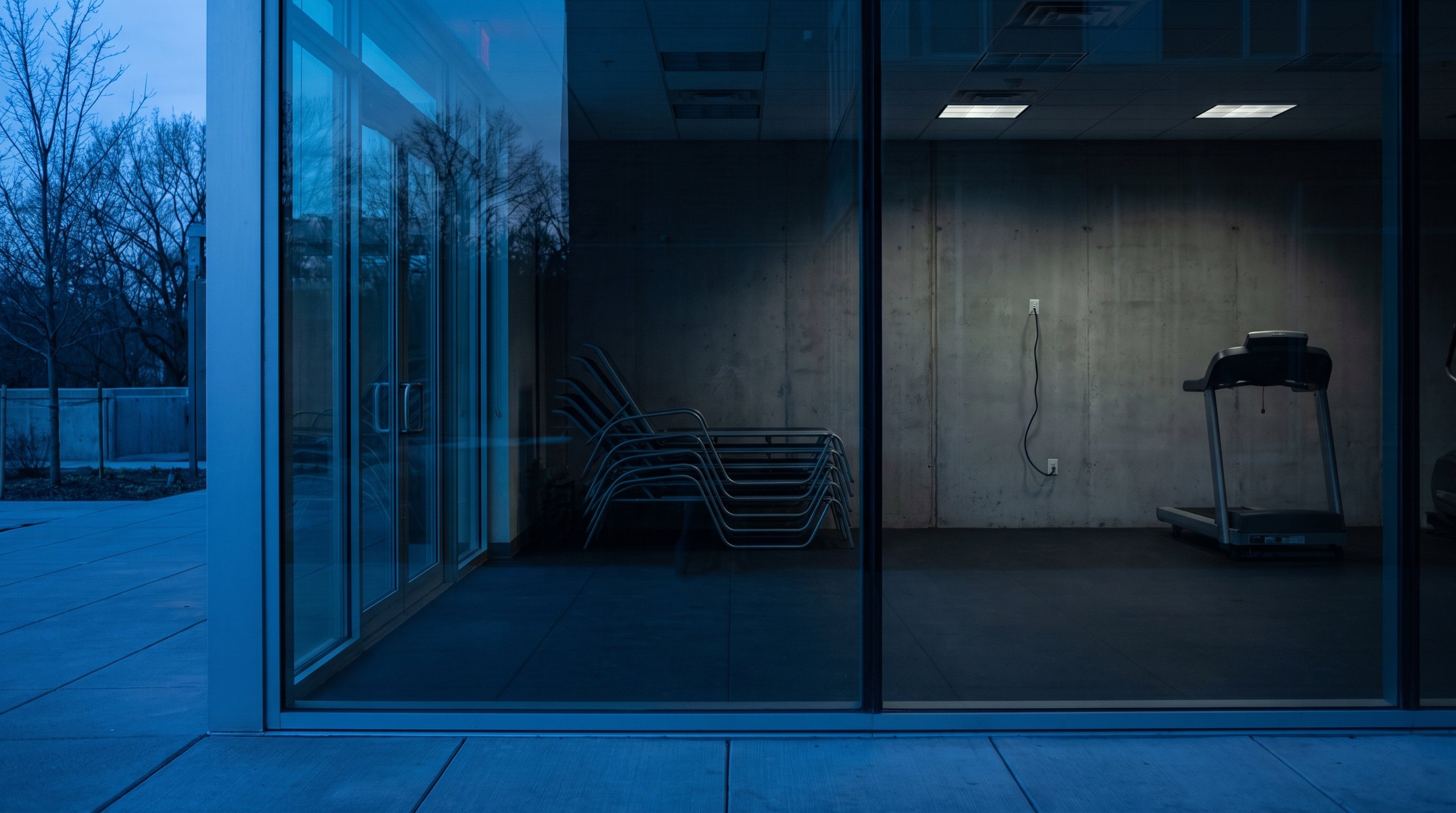
It doesn’t go back to neutral. It converts from an asset into a documented complaint. J Turner Research found that 26.73 percent of one- and two-star reviews in 2023 included a complaint about amenities not being open or functional, which is a 137.9 percent increase over the 11.24 percent lifetime rate. Across all reviews regardless of star rating, 5.8 percent raised an amenity complaint in 2023, up from 5.0 percent in 2019 and 4.5 percent in 2020.
That’s the single most actionable statistic in this guide. A closed pool, a broken treadmill, or a package room that is always full does not return the community to neutral. It generates a public review that suppresses the online reputation score prospects use to shortlist properties, and it does so in the exact channel where amenity marketing was supposed to pay off.
What is the practical rule?
Do not add an amenity you cannot staff, maintain, and keep open on a published schedule for the full term of a lease. The operating commitment is the real cost, not the installation, and it’s the part that rarely makes the pro forma. If the answer to “who opens this, who cleans it, and who fixes it within 48 hours” is unclear at the budget meeting, the amenity will be closed within a year and the reviews will say so.
What Does Everyday Service Have to Do With Amenity Value?
Why does cleanliness keep showing up in the data?
Because residents evaluate a community on what they walk past, not what they tour. Community appearance and cleanliness placed in the renter top three in the NAA reporting on resident experience, and clean common areas were named by 53 percent of RentCafe respondents as making a real difference. Neither survey was asking about waste specifically. Residents brought it up on their own.
Waste is where cleanliness usually fails first, because it is the one amenity-adjacent system that runs every single day and fails visibly. A compactor that overflows on a Sunday is seen by every resident who parks near the enclosure. Bags left in a breezeway are seen by everyone on that floor. Those are the images that end up in reviews and in the renewal decision, and they are far cheaper to prevent than a capital amenity is to build.

Where does doorstep collection fit?
It fits in the low-premium, high-frequency tier, alongside package handling and pest control. Doorstep waste collection is one of the few amenities that residents use on a set schedule several nights a week, which is why it behaves more like a retention feature than a rent driver. Our guide to what valet trash is and how it works covers the service model, the pricing guide covers per-door economics, and the comparison with traditional dumpsters covers the operational difference at the enclosure.
How Do You Decide Whether an Amenity Earns Its Place?
What should the evaluation look like?
Score it before you fund it, using evidence you can actually collect. Six factors separate the amenities that hold their value from the ones that become line items nobody defends. Run each candidate through all six and total the score. Anything below about 12 out of 18 is a conversation, not a commitment. You don’t need perfect data for this, you need consistent data.
The factor that surprises most operators is failure visibility. An amenity that fails invisibly, such as a rarely used conference room, costs you money quietly. An amenity that fails visibly, such as a pool or a trash compactor, costs you money and reputation at the same time. High-visibility amenities need a higher confidence threshold before you add them.
| Factor | Question to answer | Score 3 when |
|---|---|---|
| Demand evidence | Is it requested on tours and in surveys, or only in trade press? | Your own prospects ask for it unprompted |
| Usage frequency | How many times per week will a typical resident touch it? | Daily or several times a week |
| Operating cost | What does it cost to staff, clean, insure, and repair annually? | Predictable and contractually fixed |
| Failure visibility | Who notices on the day it breaks? | Failures are contained and quickly recoverable |
| Competitive parity | Do your three closest comps already offer it? | It closes a gap prospects mention by name |
| Revenue mechanism | Does it raise rent, add a fee, or protect renewals? | At least one mechanism is measurable within a year |
Which Amenities Should You Cut First?
What are the signals?
Low measured usage plus high fixed cost plus visible failure risk. Access control data makes the first one concrete: if your system logs entries to an amenity space, pull twelve months and look at unique residents rather than total swipes. An amenity used heavily by six households is a service for six households, even though it’s priced as if it serves the property.
The second signal is a premium that has already eroded. Greystar’s finding that willingness to pay for sustainability features fell 24 percent in a year, while interest held steady, is a reminder that yesterday’s differentiator becomes today’s expectation. When an amenity has become an expectation, it stops supporting a premium and starts functioning as table stakes you still have to maintain.
The third signal is staffing conflict. If the same on-site team that responds to work orders is also opening, cleaning, and closing an amenity space, that amenity is being funded out of maintenance capacity. Given that residents put maintenance and repairs at the top of their priority list, borrowing hours from it to keep a lightly used room open is a trade most communities would not make on purpose. Track work order response times for a few weeks against the amenity staffing schedule and the conflict usually shows up quickly.
| Cut signal | How to verify it | Better use of the dollars |
|---|---|---|
| Fewer than 10 percent of households use it in a year | Access control logs, reservation records | Fund a daily-use service amenity instead |
| It appears in reviews only when it is broken | Review text search for the amenity name | Repair reliability before expanding scope |
| Its premium no longer shows in comp pricing | Comp survey of your three nearest competitors | Maintain at minimum standard, stop investing |
| Staffing it competes with maintenance response | Work order response times by week | Return the hours to maintenance, the top renter priority |
| It closes seasonally but is marketed year round | Published open dates versus listing copy | Align marketing with reality to protect reviews |
Amenity Priorities by Community Type
Does one list fit every property?
No, and applying a Class A list to a workforce community is how amenity budgets get wasted. Renter priorities shift with price point, household type, and market. The constants are maintenance, safety, and cleanliness. Almost everything else is segment specific, and the evidence supports treating it that way. RealPage reported in May 2022 that Class C renters renewed at 65 percent against 53.4 percent for Class A, so the retention lever sits in a different place by segment.
Geography matters too. Greystar found closet interest above 90 percent in Miami, Tampa, and Charlotte, while natural light peaked in New York at 93 percent and fresh air ventilation topped out on the West Coast, with San Jose at 90 percent. A national amenity list is a starting hypothesis, not a plan.
Household composition is the third variable. A community with a high share of pet owners, a student population turning over every August, or residents who have downsized from single-family homes will each weight the same amenity list differently. The table below is a starting point built from the survey evidence in this guide plus what we see operationally across community types, and it is meant to be tested against your own tour notes and renewal surveys rather than adopted whole.
| Community type | Highest-return amenities | Most common overspend |
|---|---|---|
| Workforce and Class C | In-unit or accessible laundry, lighting and security, reliable waste service | Coworking lounges and resort-style pool upgrades |
| Suburban family garden | Storage, secure parking, playground and grounds upkeep | Specialty sport courts with narrow appeal |
| Class A urban lease-up | Package management, fitness, controlled access, acoustic quality | Golf simulators and single-purpose entertainment rooms |
| Pet-heavy communities | Pet waste stations, durable surfaces, on-site pet services | Oversized dog parks without a maintenance plan |
| Student housing | Bandwidth, study space, high-frequency waste collection | Amenities that cannot survive a turn cycle |
| Senior and active adult | Doorstep services, accessibility, quiet common space | High-intensity fitness equipment |
What carries across every segment?
Three things. Maintenance response, security, and cleanliness appear at the top of renter priorities in every survey we verified for this guide, across price points and markets. They’re also the three that residents experience without choosing to, which is why they behave like a floor. An amenity strategy that skips the floor and buys the ceiling tends to produce a beautiful property with ordinary renewals.
Frequently Asked Questions
The Short List to Take Into Budget Season
If you bring one page from this guide into the next budget meeting, make it this one. Fund the floor first, then buy exactly one differentiator you can keep open for the life of a lease.
| Fund this | Before this |
|---|---|
| Maintenance response times | Any new shared amenity space |
| Lighting, controlled access, and security | Entertainment and lifestyle rooms |
| Reliable waste and grounds service | Specialty sport courts |
| In-unit laundry where it is still missing | Coworking buildouts |
| Package management that scales with volume | Smart-home packages residents did not request |
| Secure or covered parking | Amenities your comps already discount |
Related Resources
- What Is Valet Trash? explains the doorstep collection model and where it fits in an amenity package.
- How Much Does Valet Trash Cost? covers per-door pricing so you can score the amenity on real numbers.
- How to Choose a Valet Trash Provider is the evaluation guide for the service side of an amenity decision.
- Valet Trash vs. Traditional Dumpsters compares the two container models on cost, cleanliness, and resident experience.
- Apartment Recycling and Waste Reduction covers the sustainability side of the same operational budget.
- Greystar 2025 Design Survey is the largest current resident design dataset, drawn from more than 137,000 residents.
- NAA: Disconnects Between Property Managers and Renters documents the gap between operator assumptions and resident priorities.
- RentCafe: Top Apartment Amenities Renters Want is the must-have and willingness-to-pay survey behind the chart above.
- J Turner Research: What Is Driving Increased Dissatisfaction quantifies how often broken amenities show up in negative reviews.
Reviewing Your Amenity Budget
If community appearance and cleanliness are pulling down your reviews while your amenity spend sits in spaces residents rarely use, the fastest correction is usually operational rather than capital. Contact Impact Trash Solutions for a free assessment of your waste and grounds setup. Doorstep collection is one of the few amenities residents experience several nights a week, which is exactly the frequency that shows up in renewal decisions.
This page is reviewed and updated as national renter preference and turnover research is republished. Last reviewed: September 2026.