
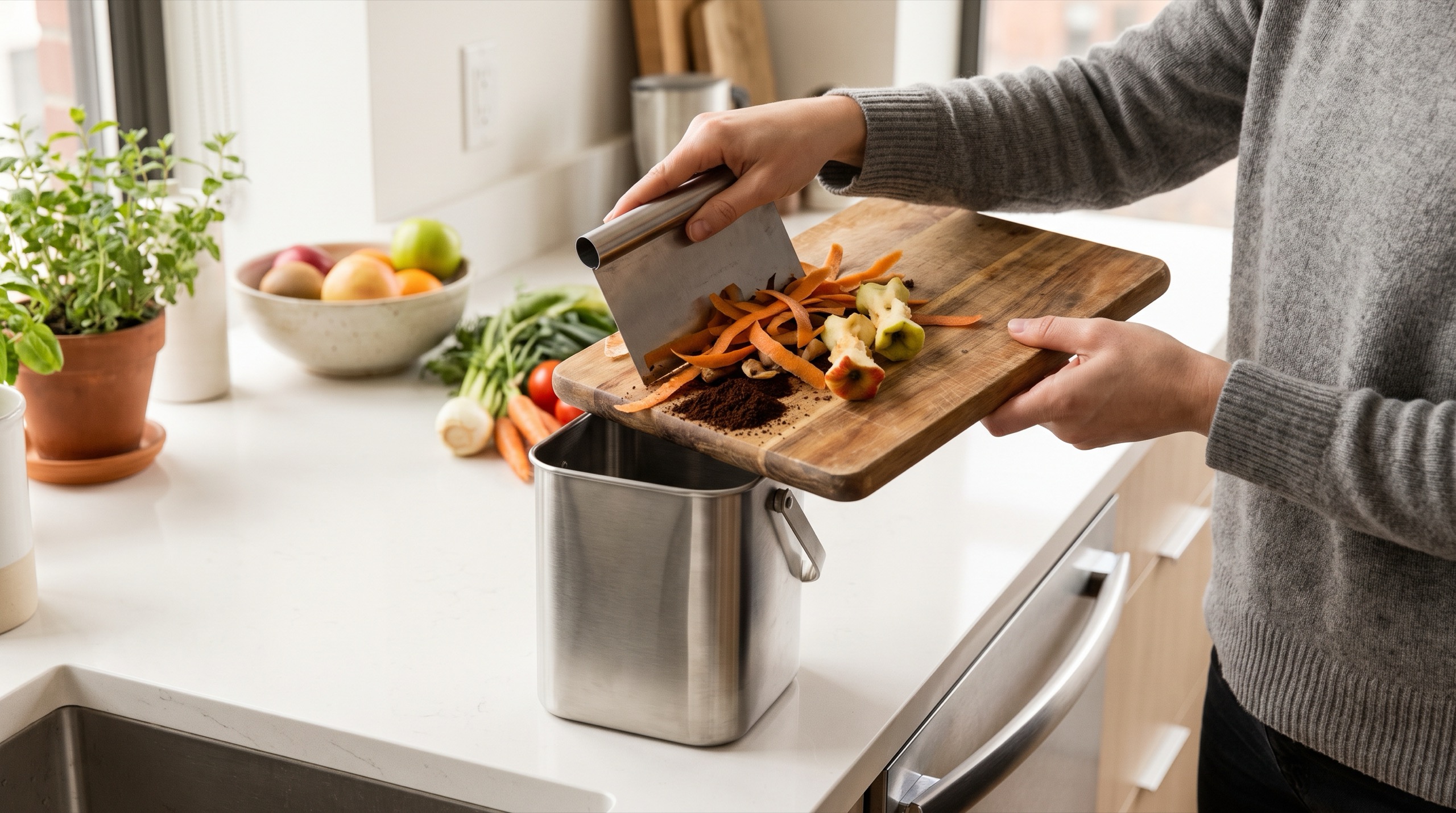
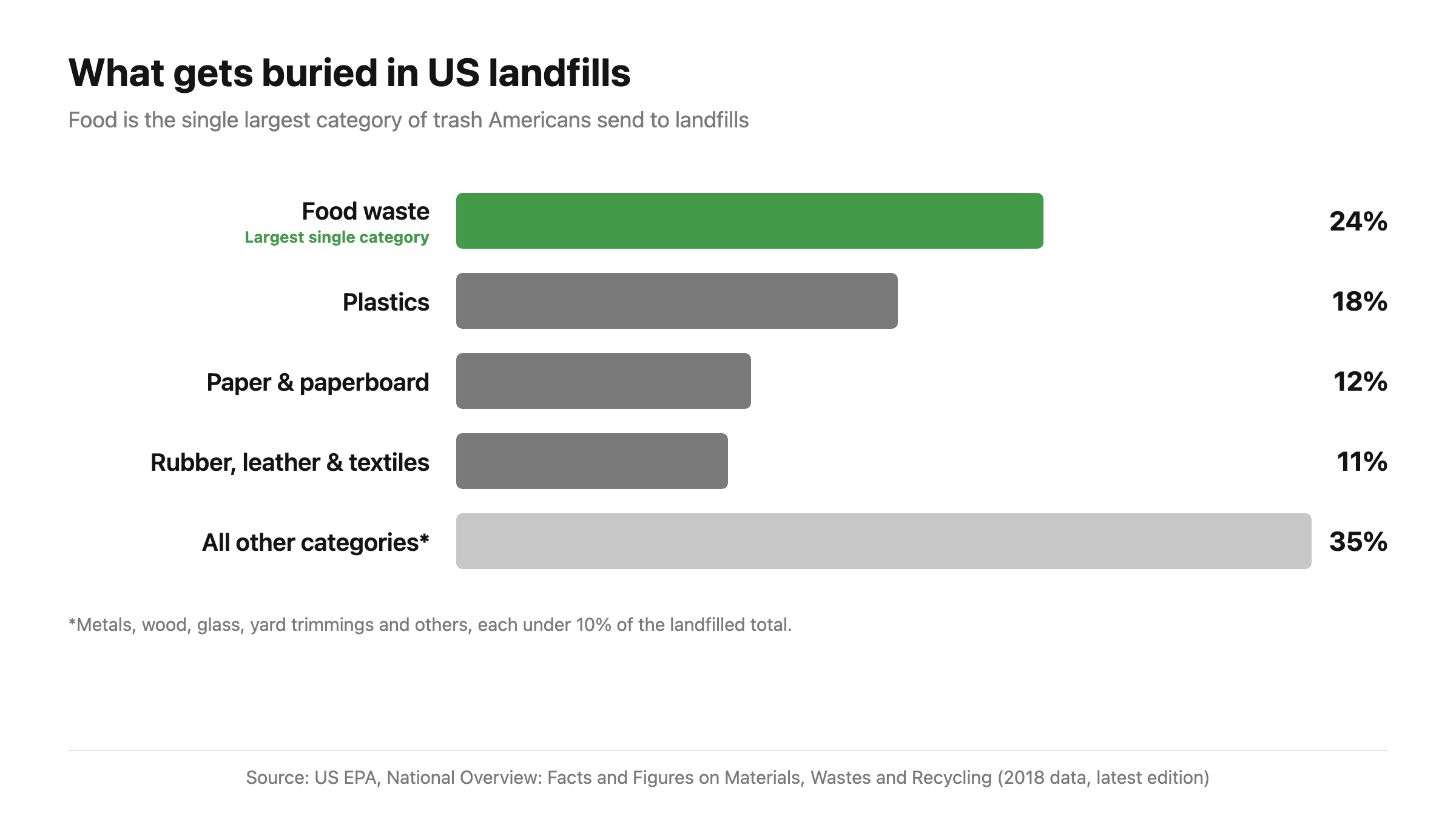
Food is the single biggest thing Americans throw in the trash. It makes up about 24 percent of everything sent to US landfills, more than plastic, more than paper, more than anything else, according to the EPA. So what are you supposed to do about it when you live in an apartment with no yard, no compost pile, and no garden to feed?
More than you think. Composting is not just a single-family, backyard-tumbler hobby anymore, and this guide is built for people without outdoor space. We’ll cover the methods that actually work in a small unit, what can and can’t go in the bin, a simple step-by-step setup, and, for property managers, why a compost program is quickly becoming both an amenity residents expect and, in a growing list of states, the law.
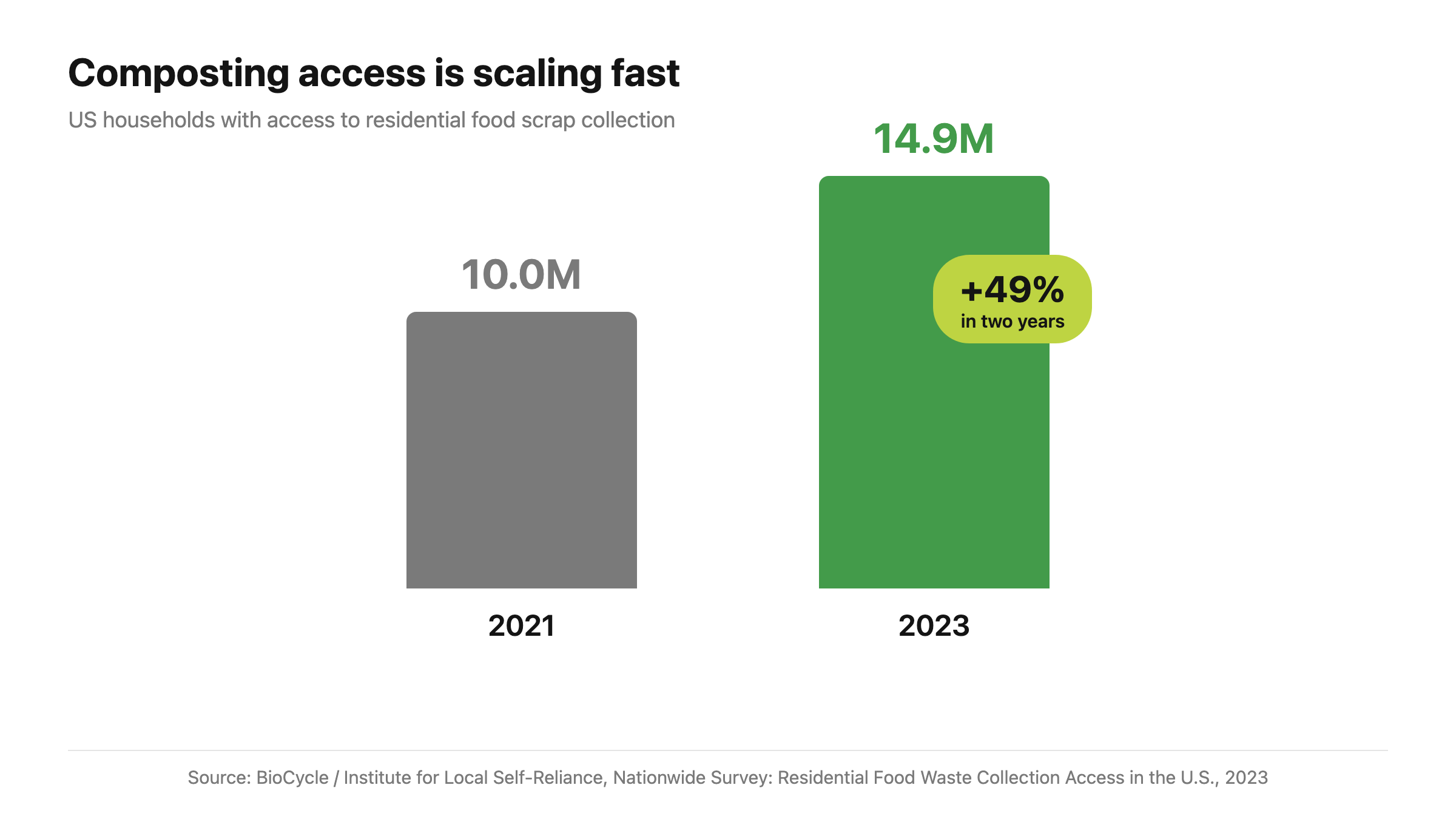
Yes, you can compost in an apartment without a yard. Food is the largest single category of trash in US landfills at about 24 percent (EPA), where it becomes the top source of landfill methane. Apartment-friendly methods include a countertop caddy paired with a drop-off, an indoor worm bin, bokashi fermentation, or an electric composter. Access is spreading fast: 14.9 million US households now have food scrap collection, up 49 percent in two years, and states from California to Vermont now require residents to keep food scraps out of the trash.
Last updated: July 2026. We refresh this page as composting programs and state organics laws change.
Why Composting Matters, Even in an Apartment
How much of what we throw away could be composted?
Food is the largest single category of trash buried in US landfills, roughly 24 percent of everything landfilled, according to the EPA’s most recent national data. Add yard trimmings and close to a third of what Americans generate is organic material that could have gone to compost instead of a hole in the ground.
That number surprises people. We picture landfills as mountains of plastic and packaging, but the biggest slice is last night’s leftovers, coffee grounds, and produce that never got eaten. Plastics come in second at over 18 percent, paper around 12 percent, and everything else trails behind.
What happens to food when it goes to the landfill?
It turns into methane, a greenhouse gas far more potent than carbon dioxide in the short term. Municipal landfills are the third-largest source of human-caused methane in the United States, and an estimated 58 percent of the methane escaping from them comes specifically from food waste, per the EPA’s 2023 methane research.
Here’s the part most people miss. Food doesn’t break down cleanly when it’s buried. Packed under tons of trash with no oxygen, it rots and releases methane rather than composting into soil. The EPA notes food decays faster and produces more methane than any other landfilled material, which is why keeping it out of the trash matters so much.
Does one apartment’s compost really make a difference?
Of the 66 million tons of wasted food that US homes, grocery stores, and restaurants generated in a single year, about 60 percent went straight to landfills and only about 5 percent got composted, according to the EPA. That gap is enormous, and it’s exactly what makes individual action worth doing.
An average household that starts diverting food scraps keeps hundreds of pounds of material out of the landfill every year. Multiply that across a 200-unit apartment community and the volume gets serious fast. We see it firsthand: when a community adds organics collection, the regular trash gets noticeably lighter and the dumpster fills up slower.
Can You Compost Without a Backyard?
What are the best composting methods for apartments?
Yes, you can compost with zero outdoor space. Apartment dwellers have at least five workable options, ranging from a simple countertop caddy you empty at a neighborhood drop-off to an indoor worm bin the EPA says can live under your kitchen sink. The right one depends on how much space, effort, and money you want to put in.
| Method | Space needed | Cost | Best for |
|---|---|---|---|
| Countertop caddy + drop-off | A small counter or freezer shelf | $0 to $30 | Almost everyone; the simplest place to start |
| Worm bin (vermicomposting) | A bin under the sink or in a closet | $40 to $120 | Residents who want finished compost for houseplants |
| Bokashi fermentation | A five-gallon bucket in a cabinet | $30 to $80 | People who want to include cooked food and small amounts of dairy |
| Electric composter | Countertop appliance footprint | $300 to $500 | Convenience seekers who want a dry, odor-free grind |
| Curbside or community pickup | A bin your building or city provides | Often free or a small fee | Anyone whose community offers it |
Two of these deserve a technical caveat. The electric “composters” you see advertised mostly don’t make compost at all. They dry and grind scraps into a soil-like powder that still has to finish breaking down in real compost or soil. Bokashi is similar: it ferments scraps rather than composting them, so its pickled output also needs a final step in soil or a pile. Neither is a dead end. They just need somewhere to finish, whether that’s your own potted plants or a community drop-off. Both are genuinely useful for shrinking volume and killing odor in a small unit.
What Can and Can’t Go in an Apartment Compost Bin
What can you compost at home?
Composting comes down to balancing “greens” and “browns.” The EPA recommends adding at least two to three times as much browns as greens by volume. Greens are wet and nitrogen-rich, like fruit and veggie scraps. Browns are dry and carbon-rich, like shredded paper and dry leaves.
That ratio is the single most useful thing to know. Too many greens and your bin gets wet, heavy, and smelly. Plenty of browns and it stays balanced and odor-free. In an apartment, your best brown is often right in the recycling pile: shredded newspaper, torn-up cardboard, or a used paper towel roll.
| Greens (nitrogen) | Browns (carbon) | Keep out |
|---|---|---|
| Fruit and vegetable scraps | Shredded paper and newspaper | Meat, fish, and bones |
| Coffee grounds and filters | Torn-up cardboard | Cheese and dairy |
| Tea leaves | Dry leaves | Fats, oils, and grease |
| Fresh plant trimmings | Paper towel and toilet rolls | Pet waste and cat litter |
| Eggshells (crushed) | Sawdust from untreated wood | Glossy or coated paper |
What should you never put in a small compost bin?
Keep meat, fish, bones, dairy, and anything greasy or oily out of any small or indoor bin. The EPA warns these attract pests and don’t break down properly, because a home setup never gets hot enough to safely process them. Also skip pet waste, cat litter, treated or painted wood, and glossy paper.
Bokashi is the one exception worth knowing about. Because it ferments scraps in a sealed bucket instead of letting them rot in open air, it can handle small amounts of cooked food and dairy that a worm bin can’t. For every other method, when in doubt, leave it out. One greasy chicken bone, or a splash of oily salad dressing, can turn a tidy worm bin into a fruit-fly problem that takes weeks to clear.
How to Start Composting in Your Apartment
How do you set up apartment composting step by step?
Start with where your scraps will go, not with the bin. The most common beginner mistake is buying gear before figuring out the destination. Search your city name plus “food scrap drop-off,” check whether your hauler offers curbside organics, or ask your property manager. Once you know the endpoint, the setup is quick.
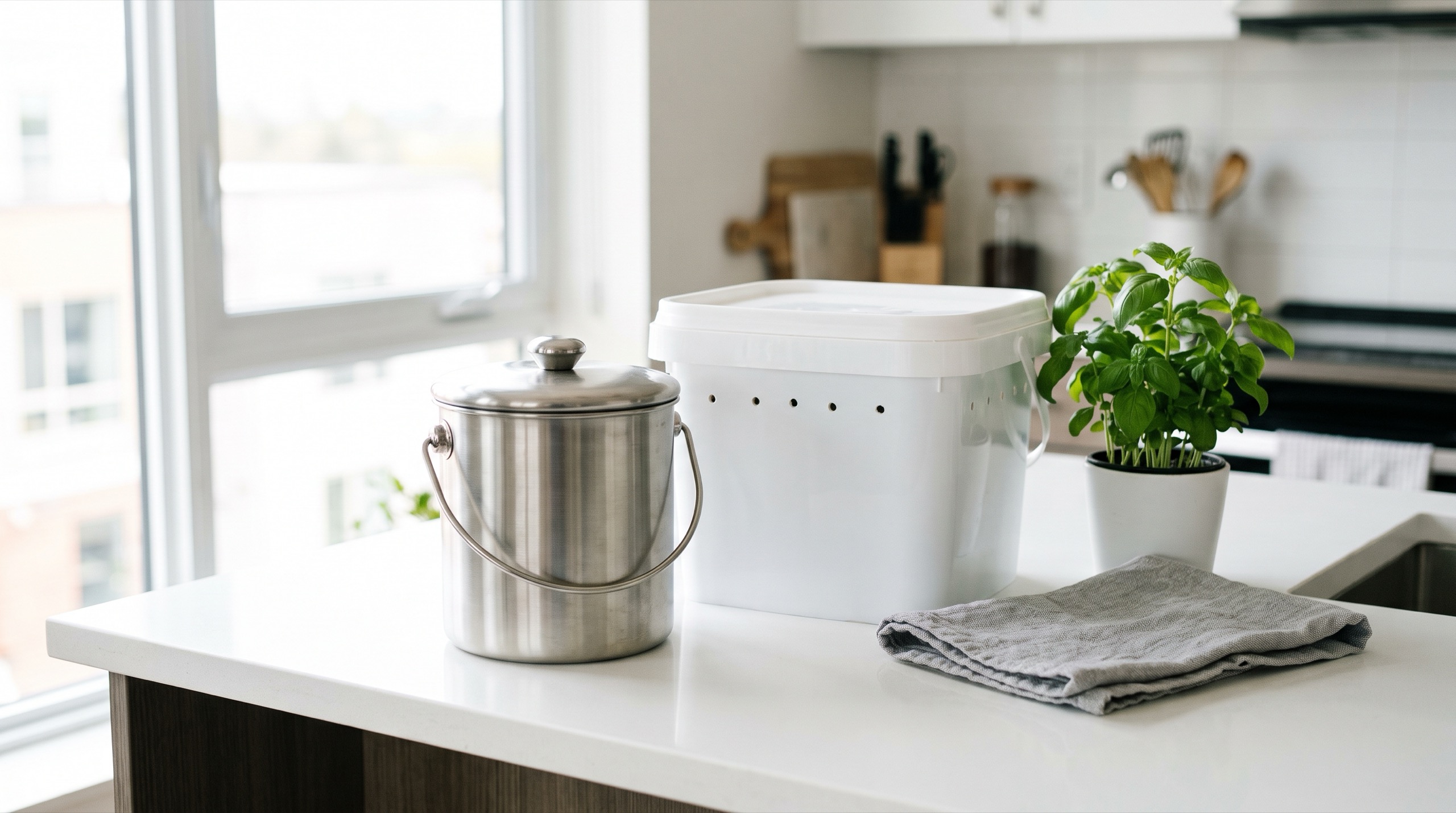
From there, five steps cover it. First, get a lidded countertop caddy or just reuse a large yogurt tub. Second, keep your scraps in the freezer between trips, which is the single best trick for stopping odor and fruit flies cold. Third, if you’re processing on-site with a worm bin or bokashi, layer in browns to balance the greens. Fourth, empty on a schedule that matches your method. Fifth, adjust as you learn what your household actually produces.
How do you keep apartment compost from smelling or attracting bugs?
A well-run compost bin shouldn’t smell bad. If yours does, it’s almost always too wet or too green, and the fix is more browns and better airflow. A properly balanced worm bin smells like damp earth, not garbage. The freezer method sidesteps the problem entirely by keeping scraps frozen until collection day.
Fruit flies are the other common worry. They breed on exposed food, so a tight-fitting lid, a layer of shredded paper on top, and regular emptying keep them away. Rinse your caddy when you empty it. None of this takes more than a minute or two a week once it becomes routine.
What Property Managers Should Know About Compost Programs
Should apartment communities offer composting?
Resident demand and regulation are both climbing fast. 14.9 million US households now have access to food scrap collection, up 49 percent from 10.0 million just two years earlier, according to the 2023 BioCycle nationwide survey. Organics collection is moving from a green perk to a baseline expectation, especially for younger renters comparing communities.
There’s a waste-hauling upside too. Food scraps are heavy and wet, so pulling them out of the trash stream can trim landfill tonnage and, in some markets, disposal costs. A well-run organics program also pairs naturally with the kind of clean, well-managed waste operation residents notice when they tour.
Which states require apartment communities to compost?
A dozen states now restrict food scraps from the landfill, and several of those rules reach residents and multifamily properties directly. As of 2025, 12 states have enacted organic waste bans, up from just a couple a decade earlier, according to ReFED. This is a trend line moving in one direction.
California is the clearest example. Under SB 1383, jurisdictions must provide organic waste collection to all residents and businesses, multifamily complexes of five or more units included, and residents are required to participate in their local program. Vermont has banned food scraps from residents’ trash statewide since July 2020. If your properties are in one of these states, compliance isn’t optional.
Related Resources
- Is Cardboard Recyclable? covers how to handle the other big apartment waste stream, and why torn-up cardboard makes an ideal compost “brown.”
- What Is Valet Trash? The Complete Guide for Property Managers explains how doorstep collection keeps recycling and organics bins cleaner.
- Valet Trash vs. Traditional Dumpsters walks through why doorstep service reduces enclosure overflow and contamination.
- EPA: Composting At Home is the federal how-to on greens, browns, and worm bins.
- EPA: Reduce Wasted Food at Home covers preventing food waste before it starts.
Frequently Asked Questions
Composting at Your Community?
If you manage a multifamily community and you’re weighing an organics or composting program, contamination and collection logistics are usually the sticking points. Contact Impact Trash Solutions for a free assessment. Doorstep waste collection is one of the most reliable ways to keep an organics program clean and actually working.
This page is reviewed and updated as composting programs and state organics laws change. Last reviewed: July 2026.