
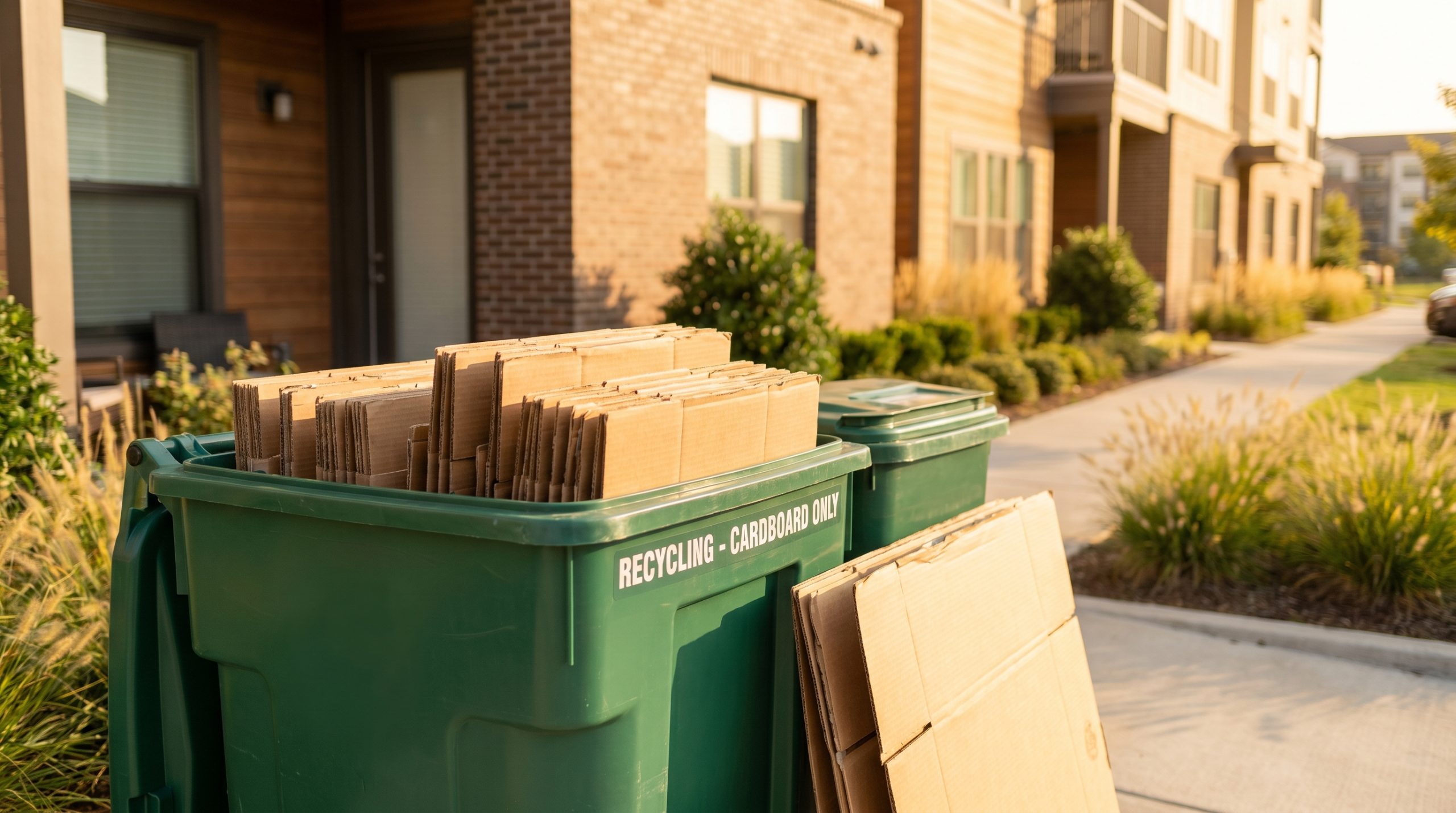
More than 33 million tons of cardboard was recycled in the United States in 2024, about 90,000 tons a day, according to the American Forest & Paper Association. So why do an estimated seven out of ten cardboard boxes still end up in the trash, especially at apartment communities?
The short answer is that cardboard is one of the most recyclable materials on the planet, but the rules are not the same in every neighborhood, and apartments face a steeper climb than single-family homes. This guide answers the questions residents and property managers ask us most about cardboard recycling, with apartment-specific guidance that generic recycling pages skip.
Yes, cardboard is recyclable. The American Forest & Paper Association reports 69 to 74 percent of US cardboard was recycled in 2024, and 94 percent of Americans live where curbside or drop-off programs accept it. The catch: it has to be clean, dry, flattened, and free of food residue. Wet, greasy, or wax-coated cardboard contaminates the load and gets landfilled, a problem that is twice as common in apartment communities as in single-family neighborhoods.
Last updated: May 2026. We refresh this page each spring as recycling rules and AF&PA data change.
Cardboard Recycling Basics
Is cardboard recyclable?
Yes. Cardboard is one of the most widely recycled materials in the United States. The American Forest & Paper Association reports that 69 to 74 percent of US cardboard was recovered for recycling in 2024, and a separate 2023 AF&PA report notes that 94 percent of Americans have access to a community recycling program that accepts cardboard.
The reason cardboard is so easy to recycle is structural. It is made from long wood fibers that hold up well through repeated processing. Strip away the tape and the food residue, and what is left is essentially the same material every paper mill in the country buys.
That does not mean every box gets recycled. The EPA estimates the actual cardboard recycling rate is closer to 53.5 percent based on 2019 generation data (Resource Recycling, 2025), and The Recycling Partnership found that seven out of ten cardboard boxes still end up in the landfill. The gap between “recyclable” and “actually recycled” is where this guide lives.
What types of cardboard can be recycled?
Two main categories are accepted in nearly every US program. Corrugated cardboard is the thick, three-layer material used for shipping boxes, with a wavy fluted core sandwiched between two flat liners. Boxboard, sometimes called paperboard, is the single thin layer used for cereal boxes, shoeboxes, tissue boxes, and paper towel tubes.
Shiny and glossy cardboard counts too. Many residents assume a glossy cereal box or a slick shoebox is off-limits, but most haulers accept it as long as the coating is printed on, not waxed. The fingernail test is a useful shortcut: if you can scrape the coating off with a fingernail, it is wax and the box belongs in the trash. If your nail just scratches the print, recycle it.
How many times can cardboard be recycled?
Five to seven times. According to the EPA, after being recycled five to seven times the fibers become too short to bond into new paper. After that, virgin fiber has to be mixed in to make new product.
That mix-in is already standard practice. AF&PA reports that about 80 percent of US paper mills use some recycled fiber, and 44.4 percent of all the fiber consumed at US mills in 2024 came from recycled paper. Your old cereal box probably has both fresh and recycled fiber in it, and it has likely already lived a previous life as a different cereal box.
What does recycled cardboard get turned into?
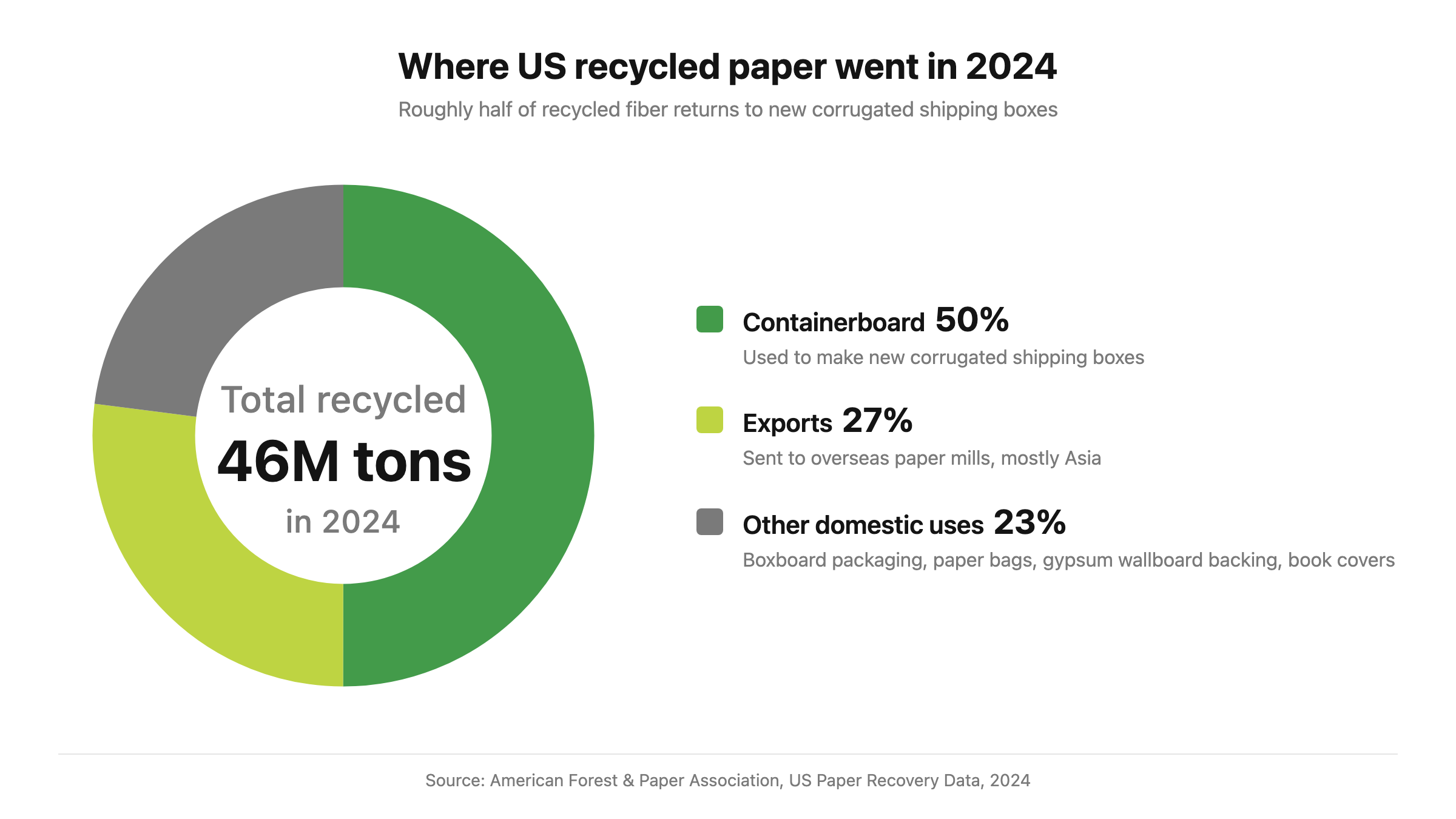
About half of all recycled paper in the United States went into making containerboard in 2024, the corrugated material used for new shipping boxes, according to AF&PA. Roughly 27 percent was exported, and the remainder became boxboard packaging, paper bags, gypsum wallboard backing, book covers, and molded protective packaging.
The Amazon box on your doorstep this morning has a real chance of being the same fiber that left a curb across the country two months ago. That cycle is the entire reason recycling cardboard matters: it keeps fiber out of landfills and reduces the demand for virgin pulpwood.
What Belongs in the Bin (and What Doesn’t)
Are pizza boxes recyclable?
Yes, even with some grease. The EPA confirmed in 2025 that “pizza boxes can be recycled, even if they have grease in them,” reversing decades of conflicting guidance from local haulers. AF&PA also added pizza boxes to its list of widely accepted materials.
There is still a saturation limit. If grease has soaked through more than half the box, that half belongs in the trash. The easy fix: tear the lid off, recycle the clean half, and toss the soaked bottom. Half a pizza box recycled is better than the whole thing landfilled.
Is wet cardboard recyclable?
Slightly damp cardboard that still holds its shape can usually be recycled, but soaked or moldy cardboard cannot. The paper mills explain it bluntly: water breaks down the fiber bonds that make cardboard cardboard. A wet box also drags down the value of every other piece in the load.
If your box has been outside in the rain or next to a leaky bin, let it dry on a covered porch before putting it in. If it is structurally compromised, already falling apart, or smells funky, it is trash. Mold spreads to the rest of the load and can get a whole truck rejected.
What kinds of cardboard cannot be recycled?
Four categories are typically rejected by US recycling programs. The fingernail test handles most of them: if a coating scrapes off, the box is treated and gets landfilled.
| Item | Recycle? | Why |
|---|---|---|
| Amazon shipping box (corrugated) | Yes | Standard corrugated, accepted everywhere |
| Cereal or shoebox (boxboard) | Yes | Single-layer paperboard, easy to repulp |
| Pizza box (light grease) | Yes | EPA confirmed acceptance in 2025 |
| Pizza box (saturated half) | No | Tear off the clean half and recycle that |
| Glossy or shiny shoebox | Yes | Coating is printed, not waxed |
| Frozen pizza or ice cream box | No | Plastic-lined for moisture resistance |
| 12-pack soda or beer carton | No | Plastic film coating |
| Milk or juice carton | Sometimes | Aseptic packaging, only if your hauler accepts it |
| Wax-coated produce box | No | Wax fails the fingernail test |
| Soiled fast-food box | No | Food residue contaminates the load |
| Packing tape, peanuts, bubble wrap | No | Plastic, separate disposal stream |
| Foil-lined cooler liner (meal kits) | No | Mixed material, not recyclable as paper |
Do I need to remove tape, labels, and staples?
No, you do not. Modern recycling facilities filter out tape, shipping labels, and staples during the pulping process. Granger Waste Services spells it out: “Leave labels, tape, and staples on boxes. Processing removes these items.”
What you do need to remove is anything obviously non-paper that is still inside the box. Styrofoam blocks, plastic air pillows, bubble wrap, and packing peanuts all belong in the trash, not stuffed back into the box you are about to flatten. Pull them out, then break the box down.
How to Recycle Cardboard the Right Way
How do I prep cardboard for recycling?
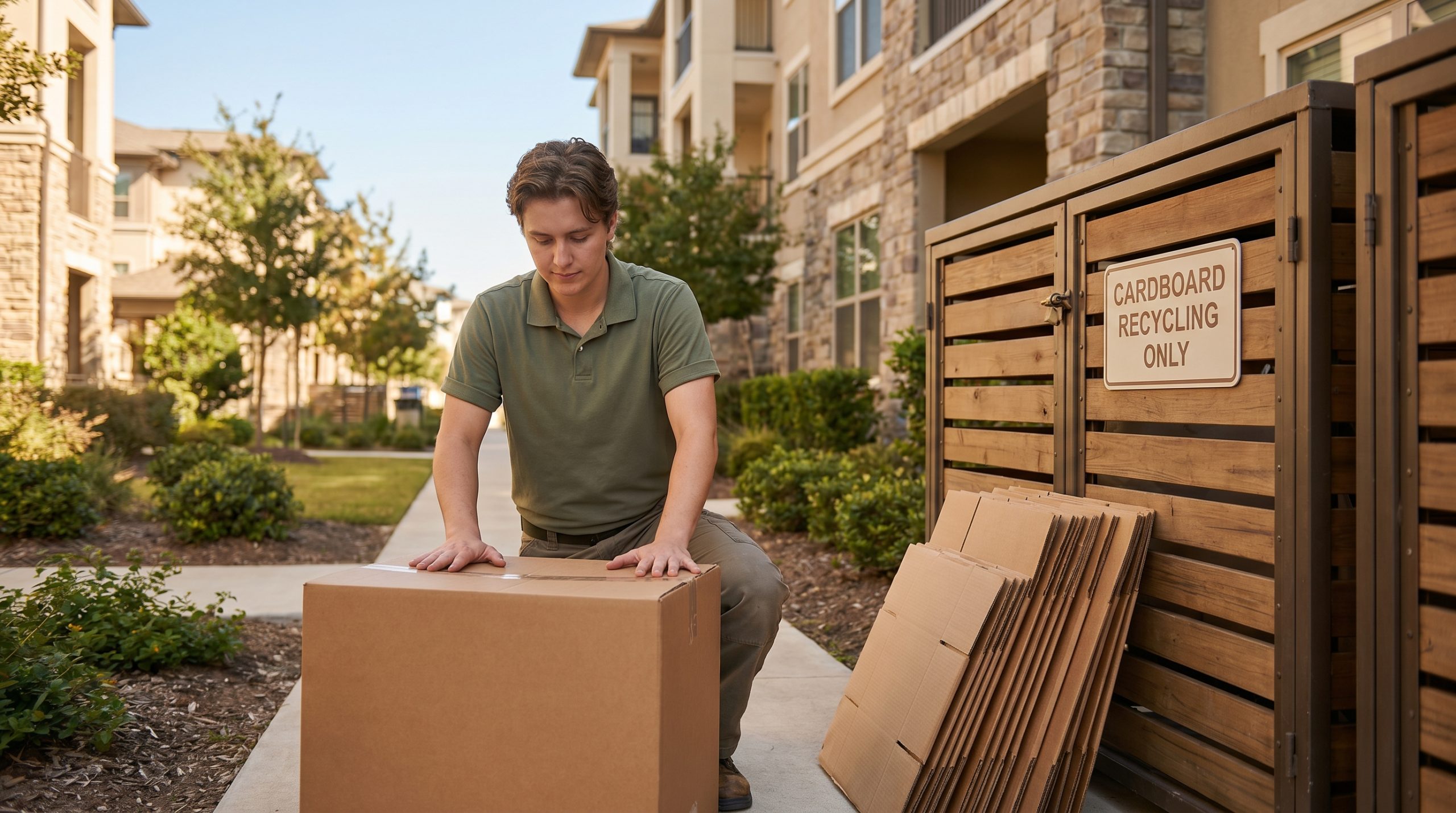
Three steps cover 95 percent of cases: empty, flatten, and keep dry. Pull out any non-paper inserts like styrofoam or air pillows. Break the box down so it lies flat. Place it loose in the recycling bin, never in a plastic bag, because bagged recyclables get rejected at the sorter.
Flattening is not optional. Un-flattened boxes hog enclosure space, fill the truck before the truck is full of actual fiber, and generate complaints from neighbors who cannot get their own recycling in. At apartment communities, this is the single most common recycling complaint we hear from property managers.
What should I do with Amazon and online-shopping boxes?
Treat them exactly like any other corrugated cardboard. Empty, flatten, recycle. The only extra step is what to do about the shipping label, since labels carry your address. Tear the label off and either shred it or toss it in the trash if you would rather not have it on the curb.
Amazon boxes pile up fast. Prime Day, Black Friday, the holidays, and move-in week at apartments all generate cardboard volumes that overwhelm normal pickup schedules. If your community’s recycling enclosure is overflowing, ask your property manager whether the hauler can add a one-time cardboard-only pickup. Most haulers will, and most property managers do not realize they can ask.
Why is so much cardboard still ending up in the trash?
Even with 94 percent of Americans within reach of a recycling program, an estimated seven out of ten cardboard boxes still end up in the landfill, according to The Recycling Partnership. The overall residential recycling rate sits at just 21 percent.
The reasons cluster into three categories. Contamination rules a lot of cardboard out: greasy, wet, or mixed-with-trash boxes get pulled at the sorter. Knowledge gaps mean residents put recyclables in the trash and trash in the recyclables, sometimes in equal measure. Infrastructure is the third leg, and it is where apartment communities fall hardest, which is where this guide goes next.
Cardboard Recycling in Apartments
What if my apartment doesn’t have a recycling bin?
You are not alone. The Recycling Partnership found that only 37 percent of multifamily homes have access to recycling, compared to 85 percent of single-family homes. That is one of the largest infrastructure gaps in residential waste, and it is the reason a lot of apartment cardboard ends up in the dumpster regardless of resident intent.
Three options, in order of effort. First, ask your property manager to add a recycling bin. Several states (California, Oregon, Washington, Vermont, Connecticut) legally require apartment buildings of five or more units to provide recycling, and many cities require it even where the state does not. Second, take cardboard to a municipal drop-off center, which most cities and counties operate for free. Third, ask your hauler whether a paid resident-direct pickup is available.
Why is recycling contamination a bigger problem in apartments?
Multifamily recycling diverts higher levels of non-recyclable material than single-family pickup. Shared bins make individual accountability low, residents come and go, signage gets out of date, and one resident’s misunderstanding can contaminate the rest of the community’s effort.
The result shows up in MRF reject rates and in contamination fees that the property pays. The Recycling Partnership’s 2024 State of Recycling report identifies multifamily as one of the top contamination drivers in the residential stream. The fix is partly behavioral, with better signage and resident education, and partly infrastructural, with separate bins and clearer separation of trash from recyclables.
How can my property manager improve cardboard recycling at our community?
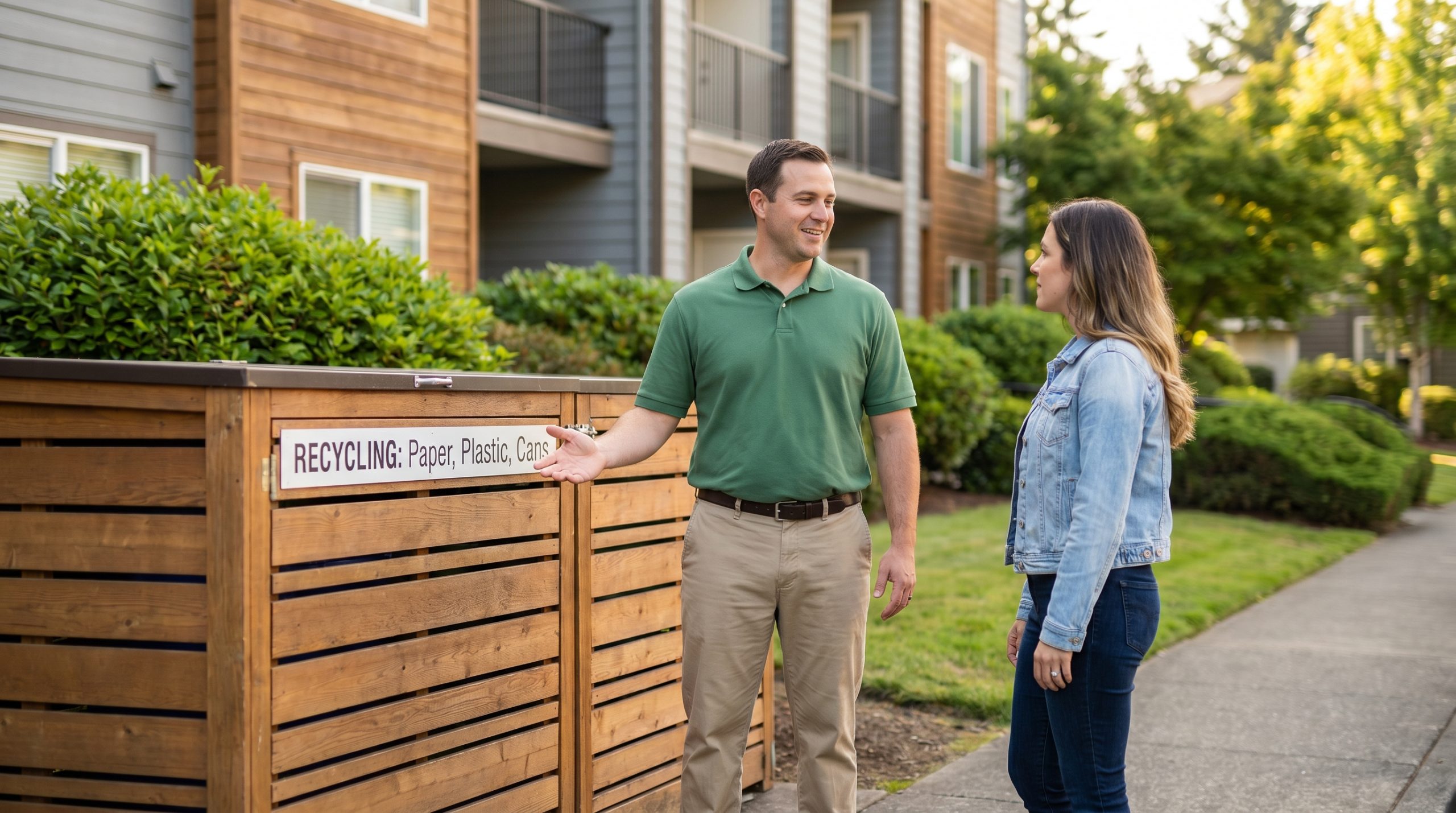
The four interventions with the strongest impact on apartment recycling are visual signage with photos, clearly labeled cardboard-only bins during high-volume weeks, lease-signing education, and door-to-door waste collection. The last one matters because it pulls landfill-bound bagged trash out of the recycling enclosure entirely, which is one of the biggest sources of cardboard contamination.
That last point is part of why valet trash service pairs well with recycling programs at multifamily communities. When residents have a clearly labeled landfill-only bin at their door, the recycling enclosure stays cleaner and the cardboard inside it actually gets recycled. Comparing doorstep collection to traditional dumpsters is a longer story, but the recycling angle alone is often enough to justify the cost.
Related Resources
- What Is Valet Trash? The Complete Guide for Property Managers covers how doorstep collection works and why it complements recycling programs.
- Valet Trash vs. Traditional Dumpsters walks through why doorstep service reduces enclosure overflow and contamination.
- How Much Does Valet Trash Cost? breaks down pricing for property managers considering the service.
- Composting for Apartments: A Practical Guide shows residents how to compost with no yard, and torn-up cardboard makes an ideal compost "brown."
- EPA: How Do I Recycle Common Recyclables is the federal guidance on cardboard, paper, and other materials.
- AF&PA: How Much Cardboard Is Recycled publishes the industry-wide US cardboard recycling rate each year.
Frequently Asked Questions
Still Have Questions?
If you manage a multifamily community where recycling enclosures are overflowing, contamination fees are climbing, or residents keep mixing trash with cardboard, contact Impact Trash Solutions for a free assessment. Doorstep waste collection is one of the fastest ways to keep your recycling bins cleaner and your cardboard actually getting recycled.
This page is updated each spring as recycling rules and AF&PA data change. Last reviewed: May 2026.